How I Went From Interior Designer to Building AI SaaS Products
I left Hungary when I was twenty with big dreams.
My mom still reminds me how, even as a little girl, I talked about living by the sea, learning languages and experiencing different countries. At the time those dreams felt almost impossible, but somehow they slowly became my reality.
One thing I never had figured out, though, was what I actually wanted to do.
I was good at school, probably a bit of a nerd, but I felt lost for a long time. I knew I wanted to create something meaningful. Something that would give me freedom, allow me to keep learning and never make me feel limited by someone else's vision.
In 2017, I started my first business, an online interior design studio. It was a huge milestone and it did well, but deep down I knew it wasn't the final destination. I kept feeling curious about what else was possible.
That curiosity led me to web design and graphic design. At first, my goal was simply to build my own website instead of depending on someone else. I loved the feeling of learning skills that gave me more independence. Every new thing I learned meant one less limitation.
In 2020, my husband and I started a new project together, which later became MyRoomDesigner.ai. The growth surprised us, especially when AI image generation suddenly became mainstream.
Before AI was even part of the product, we were building a mood board editor. I found myself obsessing over every little detail. Icons. Spacing. Buttons. User flows. Tiny interactions that most people would never notice.
That's when I realised I wasn't just interested in the business.
I had fallen in love with building products.
I wanted to understand how software was made. I wanted to be able to imagine something and then actually create it.
So I started learning to code.
My first step was Tailwind CSS. I redesigned our landing pages and parts of the product myself. Seeing a few lines of code instantly change something on the screen felt almost magical. I was completely hooked.
This was in 2024, just before AI assisted coding really took off.
As the tools improved, I began using AI to help me write CSS, review my code and experiment faster. I built my own reusable UI components and gradually became more comfortable creating interfaces myself.
Eventually I discovered Cursor. It became both my coding partner and my teacher. Beyond helping me write code, it gave me the confidence to understand what was happening behind the interface. For the first time, backend concepts, databases and APIs started to make sense. It wasn't always easy, but every project taught me something new.
Then I found Lovable.
The first time I tried it, it honestly wasn't ready for what I wanted to build, so I stepped away.
Six months later I came back and it felt like a completely different product. Everything had improved. Database support, API integrations, payments and the overall development experience. It suddenly became possible to move from an idea to a working product much faster than I had imagined.
On International Women's Day, Lovable announced unlimited usage for women founders.
I decided to give it another chance.
That weekend I barely left my laptop.
I built the first MVP of minniie in just two days.
Getting the first version working was surprisingly fast. Making it feel like a real product was something entirely different.
The first version looked exactly like what you would expect from AI generated software. Functional, but generic.
So I replaced the interface with my own design system, refined the user experience, rewrote the copy and spent countless hours polishing the details until it finally felt like something I would genuinely enjoy using.
That experience taught me one of the biggest lessons I've learned so far.
AI can help you build software.
It cannot tell you what should exist.
It doesn't know your users.
It doesn't define your product strategy.
It doesn't decide which features deserve to exist and which ones should be removed.
It doesn't understand product thinking.
It doesn't create taste.
That's still our job.
Today, starting from zero is easier than it has ever been. We have incredible tools at our fingertips, but building a successful SaaS is still about much more than generating code. It's about understanding people, making thoughtful product decisions and creating something worth coming back to.
Once the first version of minniie was ready, the real work began.
Finding customers.
Writing.
Learning SEO.
Understanding LLM visibility.
Improving the product.
Launching.
Listening.
Iterating.
Building a business around the product.
It took me time to figure all of this out. There wasn't one place that explained the whole journey, from the first idea all the way to getting your first paying customers. Most resources focus on one piece of the puzzle, but building a SaaS is about connecting all of them.
That's exactly what I want to share.
Not a shortcut.
Not a promise that you'll build a successful SaaS in a weekend.
Just the real process I've been following to turn ideas into products, from finding the right idea and validating it, to designing the experience, building with AI, launching, finding customers and creating recurring revenue.
I'm still building.
And I'll keep sharing everything I learn along the way.
This is only the beginning.
From idea to SaaS
Build your own product with me.
If you'd like to follow along and eventually build your own product with me, you're warmly invited to join the waitlist — the exact process I use, from finding the right idea to your first paying customers.
Join the waitlistAs a thank you for trusting me early, the first 100 members receive 30% off when the program launches.
Keep reading
More from the magazine
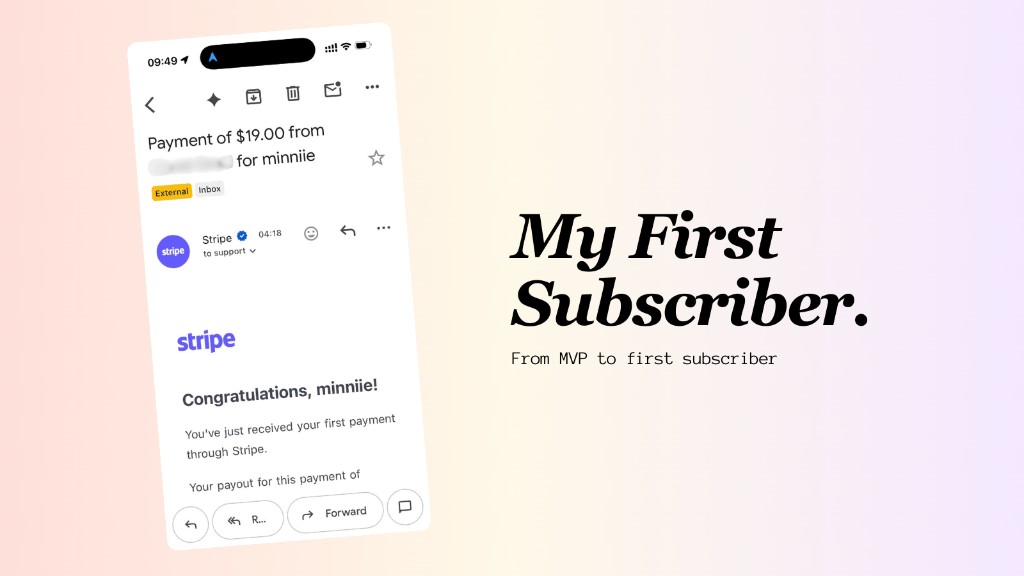
I Got My First Subscriber. Here's What Happened After I Built My MVP.
On holiday in Copenhagen, I woke up to a Stripe notification: my first minniie subscriber. Everything I did after finishing the MVP: SEO, LLM visibility, documentation as marketing, and AI-powered outreach workflows.
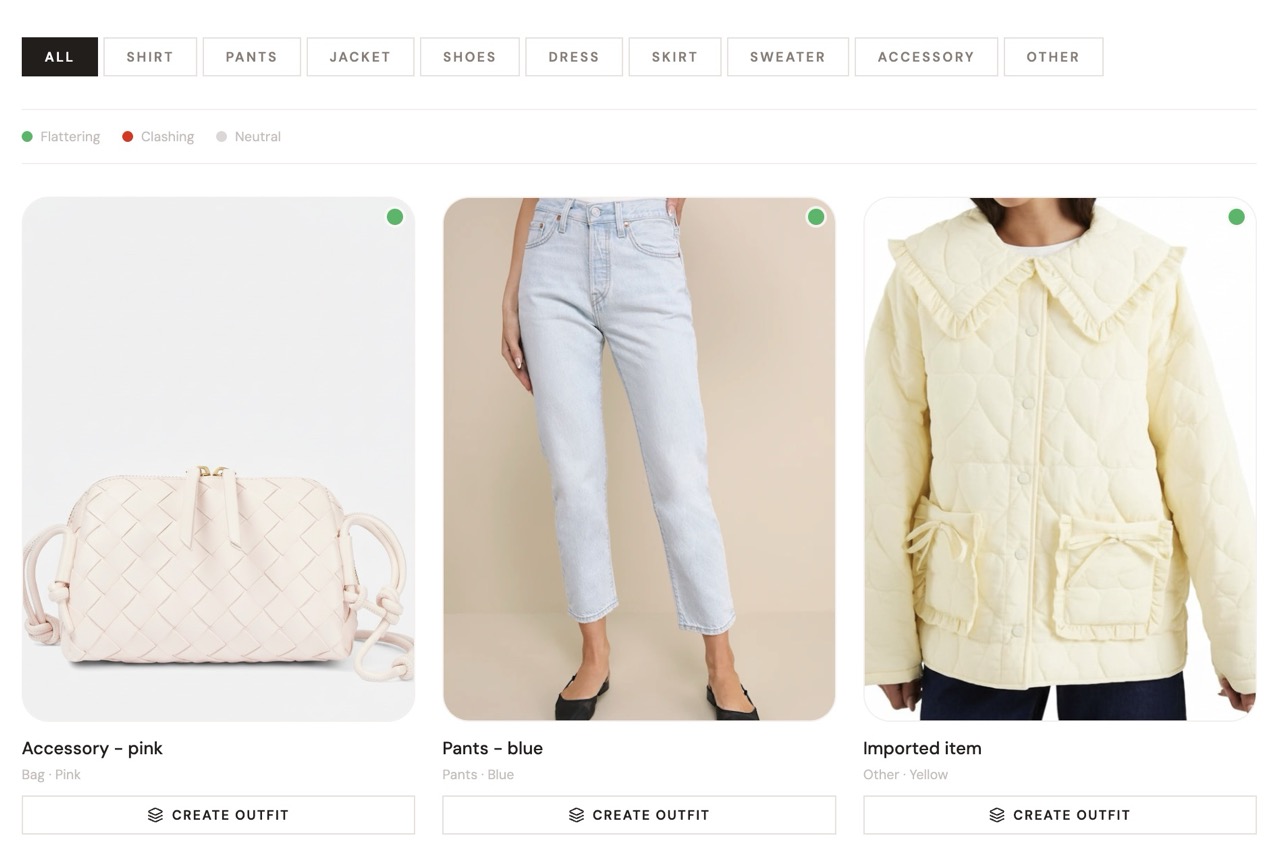
How I Built a Product in One Day With Lovable — and Turned It Into a Real Product With My UI Kit
I built a working AI product in one day using Lovable — then transformed it from a prototype into a polished product by adding my own UI kit on top.
These UI decisions doubled revenue in a real SaaS product. Now you can preview, buy and use them too.